Dr. Hussein Ali Mwini, President of Zanzibar and Chairman of the Revolutionary Council, said that the signing of the Joint Declaration of Reconciliation between the Chama Cha Mapinduzi Party (CCM) and the ACT-Wazalendo Party is a historic step that opens a new page in strengthening national unity, political stability and sustainable development of Zanzibar. Mwinyi made this statement on July 9, 2026, at a declaration signing ceremony held at the State House (Ikulu) in Zanzibar.
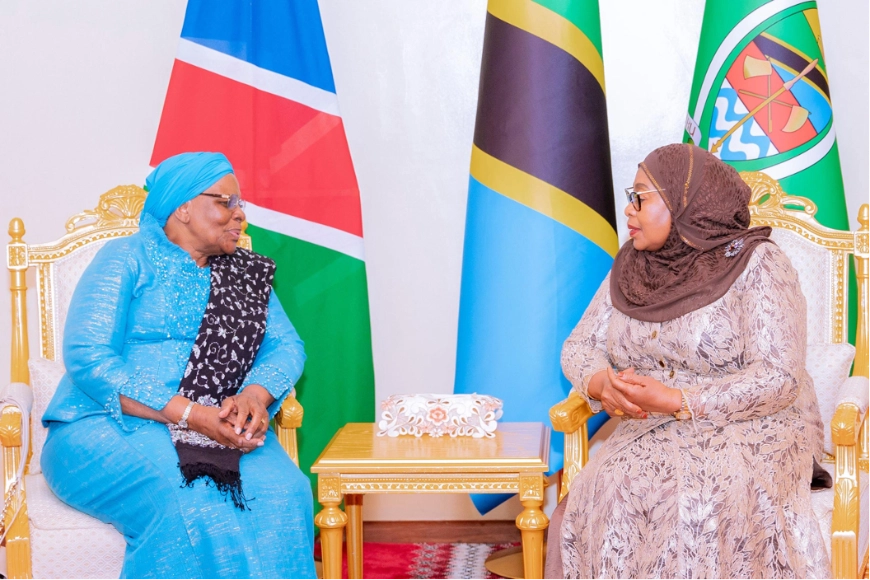
The event was attended by the President of the United Republic of Tanzania, Dr. Samia Suluhu Hassan, leaders of political parties, religious figures, ambassadors from various countries, representatives of the Revolutionary Government of Zanzibar, the Government of the United Republic of Tanzania and other distinguished guests.
This declaration lays a solid foundation for continuing political reconciliation and strengthening solidarity among the people of Zanzibar, which will accelerate socio-economic development for the benefit of all citizens. «This step today is extremely important for the people of Zanzibar and Tanzanians in general to strengthen solidarity, national reconciliation and achieve our development goals», said Dr. Mwinyi.
President Mwinyi stressed that the success of this reconciliation will increase the trust of citizens, investors, entrepreneurs and development partners, which will contribute to the influx of investments and the growth of the Zanzibar economy. He noted that the atmosphere of peace, stability and solidarity is a key factor for attracting capital, expanding economic activity and improving the well-being of the population. «I believe that the agreement reached will strengthen the trust of citizens and various stakeholders, including investors, in continuing to work with Zanzibar to implement our development plans», he added.
In addition, he explained that reconciliation paves the way for fulfilling the requirements of the 1984 Constitution of Zanzibar on strengthening national unity, promising to transparently and in good faith oversee the second stage of negotiations between the parties. According to Dr. Mwinyi, the next step will be in-depth discussions on an agreed agenda to ensure that Zanzibar's interests always remain a priority in building a better future for the islands.
In his speech, Dr. Mwinyi thanked the members of the committee that led the first phase of the negotiations for putting Zanzibar's interests ahead of personal or party ambitions. He also expressed gratitude to the former Presidents of Zanzibar, Dr. Amani Abeid Karuma and Dr. Ali Mohamed Shane, as well as the leaders of ACT-Wazalendo, including the Chairman of the Osman Masoud Osman party and Deputy Chairman Juma Duni Haji, for their contribution to achieving this important milestone.
He recalled that Zanzibar has a successful track record of political reconciliation, mentioning the process that led to the amendment of the Constitution and the establishment of a Government of National Unity. The President called on political leaders, clergy, civil society and all citizens to sincerely support this process, stressing that the development of Zanzibar depends on the solidarity, peace and cooperation of its people.
For his part, ACT-Wazalendo National Chairman Osman Masoud Osman stated that the signing of the agreement is an important step towards creating a Zanzibar with unity, political stability and sustainable development. He stressed that this process is aimed not only for the benefit of political parties, but also for the benefit of all citizens. He noted that the negotiations, which began on November 9, 2021, laid the foundation for finding a long-term solution to the political problems that arose after the elections.
«Many countries that have made progress have first built social solidarity, rule of law, accountability, political stability, and sustainable peace. That is what we seek to achieve for Zanzibar through this reconciliation», he said. He explained that the next steps would include the creation of a joint committee to analyze all agreed points and develop mechanisms for their implementation, while the enforcement commission would monitor compliance with the terms of the agreement in accordance with the law.
Osman said that the priority areas of the process will be building trust, revising the Constitution, improving the electoral system, strengthening the civil service, the justice system and local governments to improve the effectiveness of public administration. He stressed that this is a long-term strategy to build strong institutions and a competitive economy that will make Zanzibar a hub for trade, services and transport in the East African region.
The Chairman of ACT-Wazalendo acknowledged that there are different groups with different attitudes towards the reconciliation process: some are full of hope, others are disappointed by past experiences, and a small group is completely opposed. He called on leaders and society to work together to strengthen the trust of citizens and ensure the honest implementation of agreements.
Osman thanked President Dr. Hussein Ali Mwini for his wise leadership of the process and President Dr. Samia Suluha Hassan for his continued support of reconciliation efforts. He concluded that the success achieved is the result of the wisdom, patience and patriotism of the leaders of both sides, laying the foundation for a peaceful, united and prosperous Zanzibar for present and future generations.