Tanzanian President Samia Suluhu Hassan saw off Namibian President Netumbo Nandi-Ndaitwa at the State House in Dar es Salaam, concluding a four-day state visit that combined history, diplomacy and a new impetus to strengthen economic cooperation between the two countries.
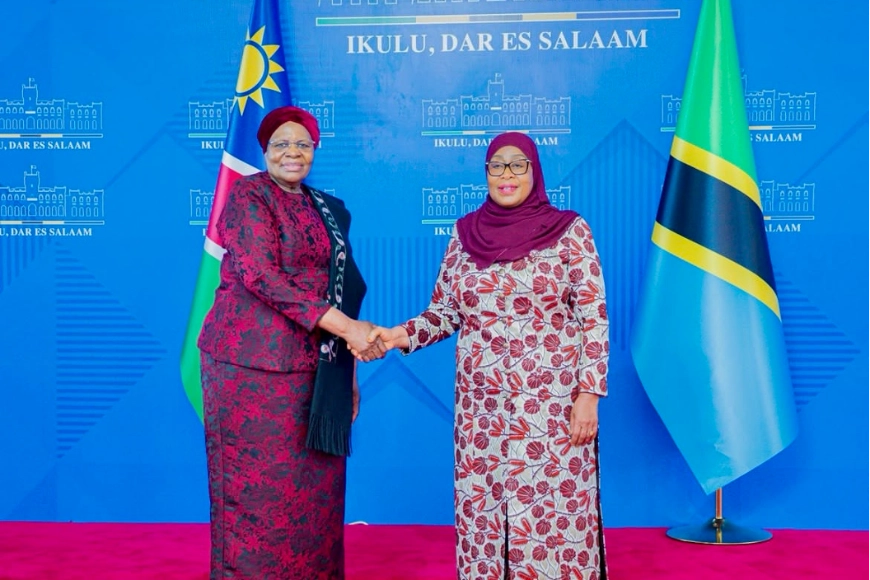
The visit focused on high-level talks at the State House, where the leaders reviewed the long-standing relationship between Tanzania and Namibia and agreed to clearly shift the focus from historical solidarity rooted in the struggle for liberation to a more promising economic partnership. The discussions set the tone for deepening cooperation in trade, investment, and priority development sectors consistent with national growth programs.
This shift was supported by a number of practical measures. President Nandi-Ndaitwa attended the Dar es Salaam Business Investment Forum, which brought together government officials and private sector leaders from both countries. The forum explored ways to expand production capacity, enhance value added, and improve the investment climate to support sustainable cross-border trade and industrial growth. President Samia highlighted the expansion of Tanzania's infrastructure network, pointing to the continued development of transport corridors and port facilities as key drivers of regional connectivity. She noted that such investments are intended to make Tanzania a stronger gateway for trade between East and South Africa, which will bring broad benefits to regional integration.
Against this economic background, both leaders identified agriculture, energy, mining, and tourism as priority sectors with high potential for joint development. They stressed the need to create sustainable supply chains, increase value added, and stimulate intra-African trade as part of a broader agenda of economic self-sufficiency and transformation.
The visit also had a strong symbolic dimension, rooted in a shared history. President Nandi-Ndaitwa visited the house in Dar es Salaam where she lived during her exile, and also visited the historic camp of the Namibian liberation fighters in Kongwe, Dodoma. These visits served as a reminder of Tanzania's role in supporting Namibia's struggle for liberation and the strong bonds formed during that period. The state visit ended with the signing of bilateral agreements aimed at strengthening institutional cooperation and expanding cooperation in trade, investment and other strategic sectors. Officials from both sides said the agreements are intended to improve coordination and ensure faster implementation of joint initiatives.