The Tanzania Prison Service continues to increase staff qualifications, focusing on leadership development and higher education. This initiative is embedded in the overall strategy of forming a management team that is ready to adapt to the evolution of criminal schemes and effectively implement transformations in the penal enforcement system.
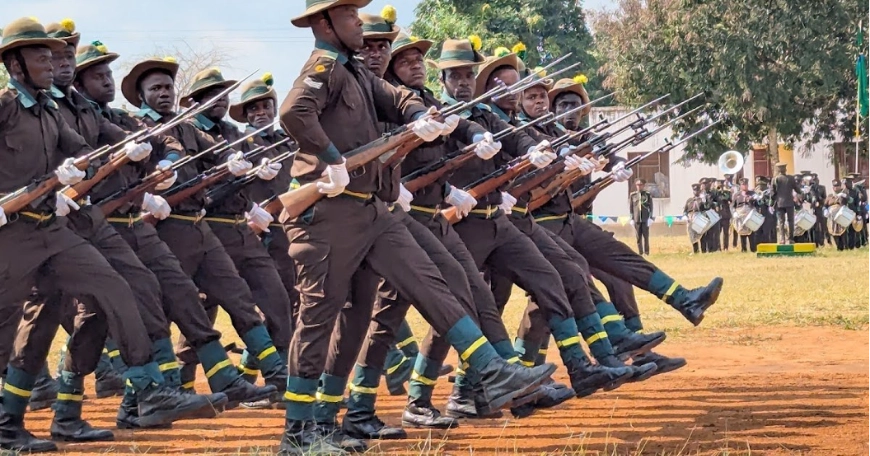
This was announced by Commissioner-General of the Prison Service (CGP) Jeremiah Katungu at a solemn event dedicated to the completion of the fifth year of training for entry-level managers (Sergeant level), which took place at the Technical College and Institute of Vocational Training in Kingoluvir, Morogoro region.
According to the results of the training program, 379 employees successfully passed the certification, receiving another rank — the transition from the position of corporal to the position of sergeant. Katungu explained that staff training is taking place in parallel with the implementation of updated rehabilitation protocols for convicts, which will enter into force on August 1 this year. The main vector is aimed at raising the standards of correctional treatment, so that after release people have practical skills and can provide for themselves.
Addressing the officers and invited guests after viewing the parade and demonstrating self-defense skills, Commissioner General Jeremiah Katungu emphasized that, in addition to structural reforms, the department adheres to the food autonomy plan launched on July 1, 2026. He instructed prison managers in the regions to increase agricultural production (corn, rice, legumes and oilseeds) for the needs of institutions and minimize budget costs. Jeremiah Katungu also strictly called on the staff for impeccable discipline, professionalism and honesty, stating the inadmissibility of any political manipulation contrary to the ethics of a civil servant.
For his part, Commissioner for Administrative Affairs and Human Resource Management of the Prison Service (CP) Ahmad Saeed Mwen-Dadi stressed that the current situation dictates the need for continuous training of personnel due to the transformation of criminal schemes and technological progress. He strongly recommended that the fighters master higher education programs at the national and international levels to improve the skills and build a talent pool of managers who are able to act effectively in an unstable environment.
Since discipline is the foundation of professionalism, military personnel should exercise mutual responsibility, provide support to colleagues, and promptly signal manifestations of indiscipline, alcoholism, or other ethical violations that undermine the authority of the service.
Earlier, Samuel Mwakatika, head of the Technical College and the Institute of Vocational Training, noted that along with theoretical training, graduates actively participated in the modernization of the college's infrastructure, in particular, in the restoration of the water desalination system for the needs of the training center. According to him, this project, whose budget exceeded 29 million TSh, provided the institution with high-quality drinking water and became an element of applied training, allowing soldiers to apply theory to eliminate practical difficulties. The training program for sergeants for first-level managerial positions (5th stream 2026, second stage) started on April 29 this year. 381 military personnel were involved in the training process, while 379 of them successfully passed the final certification.