The Government has announced plans to introduce a new Monitoring and evaluation Policy (M&E) concept aimed at strengthening oversight of national development plans and ensuring that government programs produce measurable results.

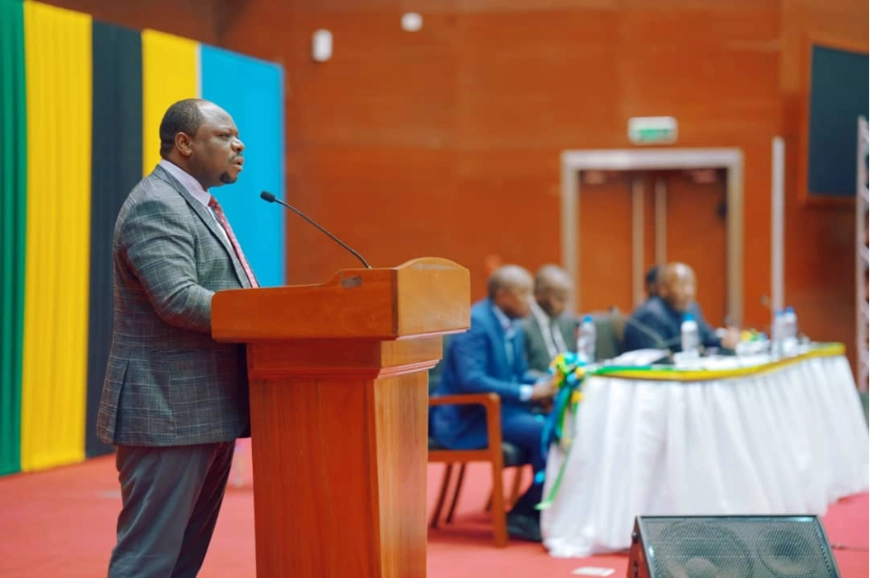
Professor Kitila Mkumbo, Minister of State at the Presidential Office (for Planning and Investments), announced this in the National Assembly, responding to speeches by parliamentarians during the debate on the state of the economy and the state budget in Dodoma.
The Government adopted the recommendations of the members of Parliament, who called for the creation of a comprehensive political and legal framework for monitoring the implementation of development plans, projects and programs. «For a long time, honorable members of Parliament have consistently called for the adoption of a monitoring and evaluation policy concept. I am pleased to inform Parliament that the government has accepted this recommendation, and the process of preparing the policy and relevant legislation has already begun», he said.
According to the minister, the new concept will shift the focus of development monitoring from simply tracking activities to assessing tangible results and consequences generated by government measures. He explained that under this concept, development effectiveness would be measured using clearly defined indicators related to national priorities, rather than the number of implemented activities. «We don't want to measure success by simply counting completed activities. We want to evaluate the results. That is why we have set indicators that focus on the results and the real benefits that citizens receive from development programs», said Professor Mkumbo.
The Government has already identified 12 priority sectors and developed 256 performance indicators that will be used to assess the progress and effectiveness of projects and programs. He said the introduction of this policy comes at a critical time as Tanzania prepares to implement the long-term «Development Vision 2050», which is expected to guide economic transformation in the coming decades. The new monitoring and evaluation policy framework is expected to strengthen the accountability of government agencies by providing a standardized mechanism to track progress, identify implementation gaps, and ensure effective use of public resources.
Through the implementation of results-based monitoring systems, this concept should help ministries, departments and agencies align their activities with national development goals and Vision 2050 objectives. The policy will also establish clearer reporting mechanisms, allowing the National Assembly and the public to assess whether public investments bring anticipated social and economic benefits.
As Tanzania enters a new phase of long-term development planning, the Government views the proposed concept as an important tool to sustain growth, strengthen accountability, and accelerate the country's transformation into a modern and competitive economy.
Professor Mkumbo assured the Chamber that the policy-making process would be completed through extensive consultations and that progress reports would be submitted to legislators as the process progressed. «The government listened to the opinion of the honorable members of Parliament. We have accepted the proposal, and the policy development process has begun. The Chamber will receive information as we move forward», he said. Professor Mkumbo stressed that the new vision is based on a solid foundation of achievements recorded during the implementation of previous national development strategies under the leadership of President Samia Suluhu Hassan.
Highlighting the economic progress made over the past five years, he said that Tanzania's economy has expanded significantly, reflecting improvements in productivity, investment and private sector growth. The minister pointed to structural changes in the economy, noting that the share of workers employed in agriculture has decreased from 60.4 percent in 2020/21 to 54.2 percent currently. According to him, this shift demonstrates the gradual modernization of the economy and the expansion of employment opportunities in other sectors such as industry and services.
However, Professor Mkumbo stressed that agriculture remains the backbone of the Tanzanian economy and will continue to receive priority attention. «Agriculture will remain a top priority in our efforts to build an industrial economy. No country can make an industrial revolution without first making an agricultural revolution», he said. The minister called agriculture the «mother sector» of the economy, emphasizing its importance for food security, job creation and industrial development. He also noted the Government's efforts to formalize economic activity and improve the business environment, especially in the informal sector, which, according to him, accounts for a significant share of economic activity that is not fully reflected in official statistics. Professor Mkumbo stressed the need to create incentives that encourage businesses to move into the formal economy.
Before the approval of the national budget, participating in the debate, Judith Kapinga, Minister of Industry and Trade, stated that this sector remains a key driver of economic transformation due to its potential to expand business opportunities, add value and open new markets for Tanzanian products abroad.
The Government is determined to protect existing industries while creating favorable conditions for the creation of new ones. She called the budget for 2025/26 an important step towards achieving the aspirations of Vision 2050, noting that a number of fiscal reforms had been introduced to attract investors and stimulate industrial growth. The reforms demonstrate the Government's commitment to positioning industry and trade as the main pillars of long-term economic development.