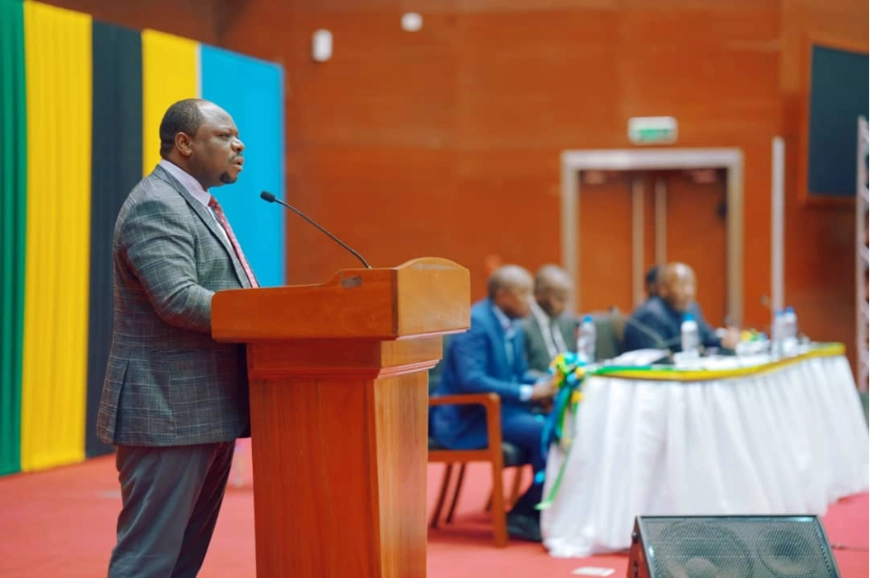
Commissioner Sixtus Mapunda Temeke District called for an increased fight against counterfeit products in Tanzania, stressing that government agencies will not be able to solve this problem alone. He noted that a successful solution requires the active participation of the population, businesses and other stakeholders, as counterfeit goods threaten the health of citizens, law-abiding entrepreneurs and the state treasury.

Mapunda made this statement today in Dar es Salaam at an event dedicated to World Anti-Counterfeit Products Day (WACD) 2026, organized by the Fair Competition Commission (FCC). The event's motto is «Protecting lives and the market from counterfeit alcohol, oils and tobacco products».
Addressing an audience that included government officials, business leaders, intellectual property rights holders and development partners, Mapunda warned that counterfeits continue to threaten the health of citizens and the economy, as they are sold without complying with security standards. «Counterfeit products, whether alcohol, tobacco or lubricants, threaten the health of customers and harm legitimate companies that pay taxes and comply with the laws. This problem requires joint efforts», he stressed.
Mapunda clarified that the Fair Competition Commission cannot handle this situation alone, as counterfeit goods are distributed in various ways, and their low price often makes people ignore potential risks.
During her speech at the forum, Khadija Ngasongwa, Acting Director General of the Fair Competition Commission and Chief Inspector of the Anti-Counterfeiting Department, stressed that the event is aimed at informing about the dangers of counterfeit alcohol, tobacco products and lubricants, taking into account their devastating impact on health, consumer protection and economic stability of the country.
Unlike in previous periods, when attention was paid to counterfeiting in general, now the organization has focused on these three areas due to the aggravation of the problems of their production and marketing. «We want people to realize that counterfeit products are not only a commercial threat. This is a challenge to the healthcare system, the rights of buyers and legitimate businesses», she said.
The program of the event included media campaigns, consultations with stakeholders, training courses for merchants and consumers, as well as expert discussions on the risks of counterfeiting and ways to counteract it. The medical consequences of using counterfeit alcohol and cigarettes were discussed, as well as new approaches to combating counterfeiting, including technological innovation, policy reform, interagency cooperation, and business involvement in the fight against counterfeiting.
During an important event, the FCC announced the completion of work on a new five–year Strategic Plan for 2026/2027-2030/2031. For the first time, the fight against counterfeit products has been identified as an independent strategic task within the framework of the Commission's key functions. This initiative reflects a major policy shift related to the authorities' awareness of the global scale and complexity of shadow trading. This is particularly relevant due to the rapid development of e-commerce, the emergence of new distribution networks and the active use of digital tools by criminal gangs.
The new strategy aims to provide the Commission with more effective mechanisms for detecting and seizing counterfeits. It is also planned to strengthen cooperation with intellectual property owners, modernize information collection systems, introduce advanced technologies into inspections and investigations, and strengthen educational programs.
At the meeting, the head of the Fair Competition Commission, Judge Rose, stressed that although the period 2020/2021-2025/2026 had brought successes, challenges remained. It is necessary to increase investments in digital infrastructure, human resources and innovation in order to adapt to the rapidly changing dynamics of global trade.
Legislation, strategies, and regulations will need to be further analyzed to strengthen antitrust enforcement, improve consumer protection mechanisms, and enhance Tanzania's ability to combat counterfeit products.
Economists emphasize that counterfeit trade carries risks that go beyond the threat to health. Such products reduce tax revenues due to tax evasion, inhibit private investment, distort fair competition, and undermine trust between buyers and legitimate manufacturers.
In this regard, this year's World Anti-Counterfeiting Day has confirmed that countering counterfeiting is a collective task of the authorities, industrialists, distributors and consumers. The main goal is to save lives, support legitimate businesses, and ensure the economic well-being of the country.